
Viral and Virulent

^^^ My actual feels checking my social media inbox and receiving videos from my followers of viral trends involving animals…
All jokes aside, recently I did a Bite Prevention Webinar benefitting Illinois Doberman Rescue Plus. Seeing as the second week of April every year is National Dog Bite Prevention Week, I felt it was an apt topic. (THANKS to those who attended!)
But before that, I had a specific request from a follower to do a video breakdown of dangerous viral trends involving peoples’ dogs. She was just as distressed as I typically am seeing these viral videos and the massive following they receive.
And so I agreed - and received more content than I knew what to do with (thanks though!). This is the result and you’ll find the TikTok video breakdown at the end!
It felt natural to marry these 2 topics ‘cause y’all gonna get bit someday, guys!

Excuse me, but is this your toy breed? Because we’re going to break down why some of them act like that in the video, friends!
Let’s back up and talk about some startling statistics on dog bites…
More than 4.5 million people per year are bitten by dogs, with more than 800,000 needing medical attention - that is 1 in 5 people per the CDC.
Men are bitten more than women.
Children and infants are bitten considerably more than adults, comprising about half the data pool per year.
Most bites are to the limbs, followed by bites to the face and neck area. Bites to the face and neck area are more common among children and infants.
The Humane Society estimates 51% of dog bite victims are children.
The American Veterinary Medical Association states that the rate of dog bites for children is highest between the ages of 5-9.
Getting bitten by a dog is the second most frequent cause of visits to emergency rooms for children, according to a survey done by Weiss HB, Friedman DI, Coben JH, “Incidence of dog bite injuries treated in emergency departments,” in the JAMA 1998;279:53.
Children are also more likely than adults to need medical attention and are far more likely to be severely injured (CDC).
Young children score badly in discriminating dog body language and look mainly at the face of the dog to make their decisions. (Lakestani et al., 2005)
A recent study analyzed 143 YouTube videos lasting more than five seconds. What they found is that appeasement (stress) behaviors increased roughly 20 seconds before the bite and that humans made more physical contact with dogs 21 seconds before the bite.
Standing over a dog, petting, and restraining a dog were seen proportionally more frequently, increasing approximately 20–30 seconds before the bite occurred. (Sara C. Owczarczak-Garstecka et al., 2018)

I spend a TON of time during consults and sessions helping guardians identify signs that their dogs are feeling fearful or stressed so that they can avoid bites from occurring. Most of my clients tell me they will never view behavior and body language the same way again — GOOD!
Such a huge part of behavior modification is adjusting our own habits. Our dogs are always talking to us - and with their ENTIRE bodies, honestly! Improvements can sometimes begin rapidly once inter-species communication is calibrated appropriately.
I have a huge free resource on body language and stress that you can check out and so, I won’t go off the deep end about body language. You’re safe….for now!
What I do want to post is this absolutely intense list of behaviors about all of the ways dogs try to convey emotional discomfort below…
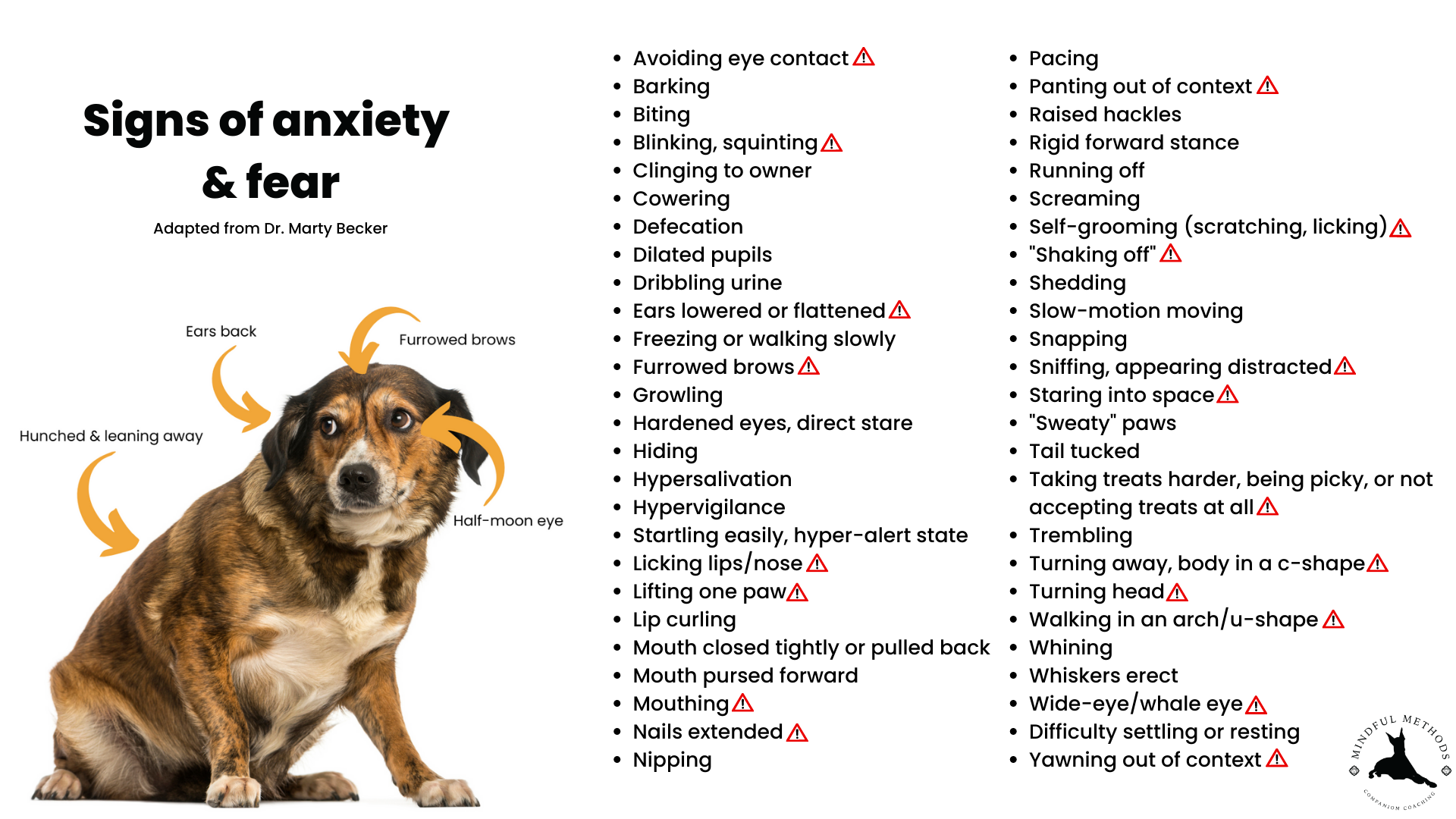
I took the liberty of calling to attention many of them on the list - not because they’re worse than any others - but because they’re the most common, yet most frequently misread.
Most of us recognize that eerie feeling we get inside when a dog tenses and stares with their head low, but there are A LOT of other things a dog might attempt to do before ever arriving at growling, snapping, or biting. The quicker we can recognize them, the safer everyone is!
Check it out - the Ladder of Aggression is one of my favorite visuals:

Some of the dogs in the upcoming video aren’t biting but they ARE climbing that ladder, to some extent.
And here’s the thing: people LOVE their pets. I know this because I wouldn’t be hired unless people cared about their companions, right? Abundantly, this is all I see out on the road is love, concern, and a desire to make their pets’ lives better. Thus, I am not demonizing anyone in these videos.
What it comes down to is education, usually. Dogs are EXTREMELY gifted at reading our body language and facial expressions. They can decipher our tone of voice and can even hear our heartbeat and smell our stress.
Alas, they are not capable of speaking our language, even though they can read it.
Humans, on the other hand, ARE capable of reading theirs, respecting it, and speaking it. We are the more intelligent species and so we owe it to them to learn.
WE CANNOT DO BETTER UNTIL WE KNOW BETTER!
TRIGGER WARNING
If you work or volunteer in animal welfare in any capacity, you may find the below video distressing to watch.