
Behavior and Physical Health
Are we fighting an uphill battle with training?
As a trainer, my primary purpose is to address behavior issues and help remedy them - but many of my clients are surprised to hear that a huge part of my process is analyzing the potential physical health of a companion. Logically, why wouldn’t it be?
In my opinion, to be a dog trainer is to be involved in animal welfare - and, where animal welfare is concerned, we have an obligation to do the best we can from an ethical standpoint. This becomes especially true when we reach in and begin attempting to modify the behavior of a companion. I won’t get too much in-depth with discussing the methods some trainers choose to apply, but suffice it to say that I feel it is wholly unethical to choose aversive methods when a companion might be in pain, sick, dealing with chronic mental health issues, or may simply be expressing a breed trait that is in context. Most “traditional” trainers would agree with that sentiment - but does every trainer possess the depth of knowledge to recognize signs of something bigger before choosing their methods? Sadly, that answer is no.
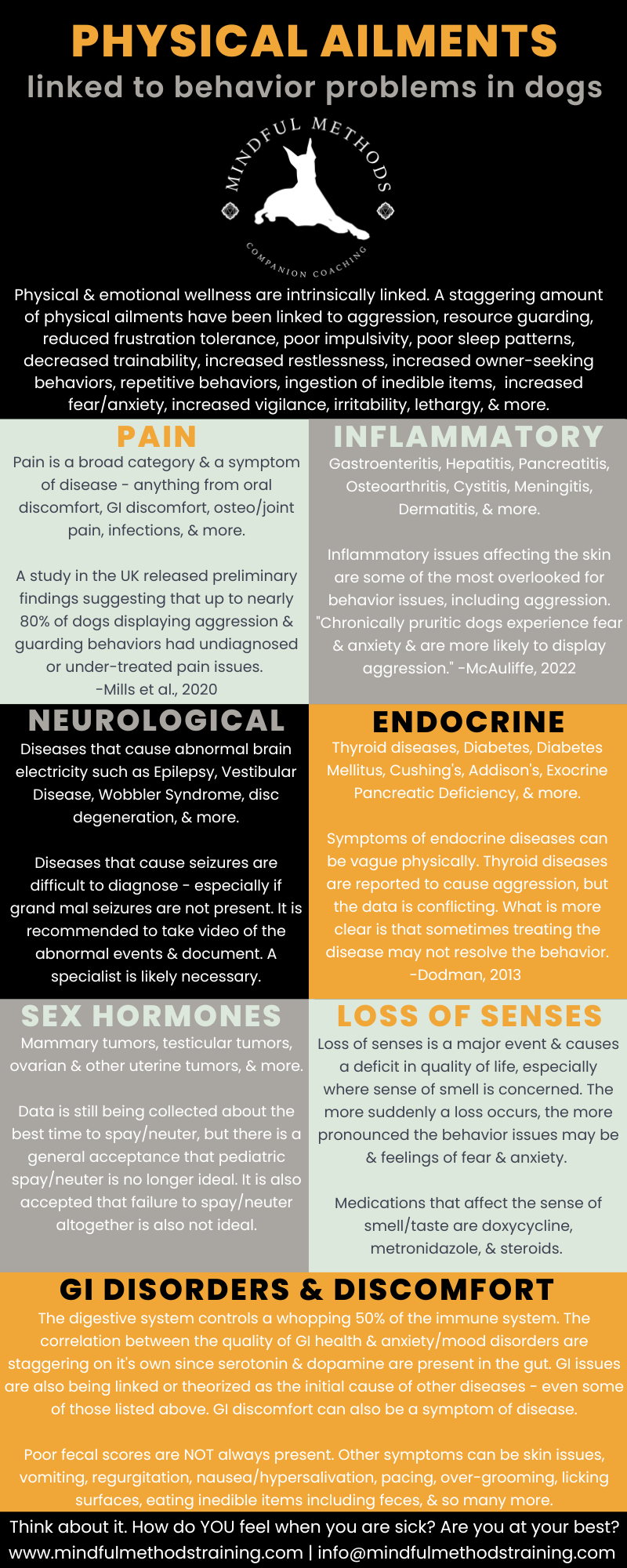
One of the most compelling studies suggests that up to nearly 80% of dogs displaying aggression and resource guarding have undiagnosed or under-treated pain issues.
Animal professionals should be analyzing the WHOLE dog: health, genetics, learning history, and their environment - past and present. Training is only the tip of the iceberg and while we are not veterinarians, we should be striving to work cooperatively with them and helping guardians communicate better about what their companions are experiencing.
Everything from my intake forms, to my initial consultation procedures, to my follow-ups begins the fact-finding mission. I want people to be HAPPY with the results of their time and money spent with me. If I am fighting an uphill battle, I do everyone a disservice - including myself. After all, a symptom of illness is also decreased trainability.
Is what we are dealing with actually a behavior problem? Or is the dog potentially physically unwell?
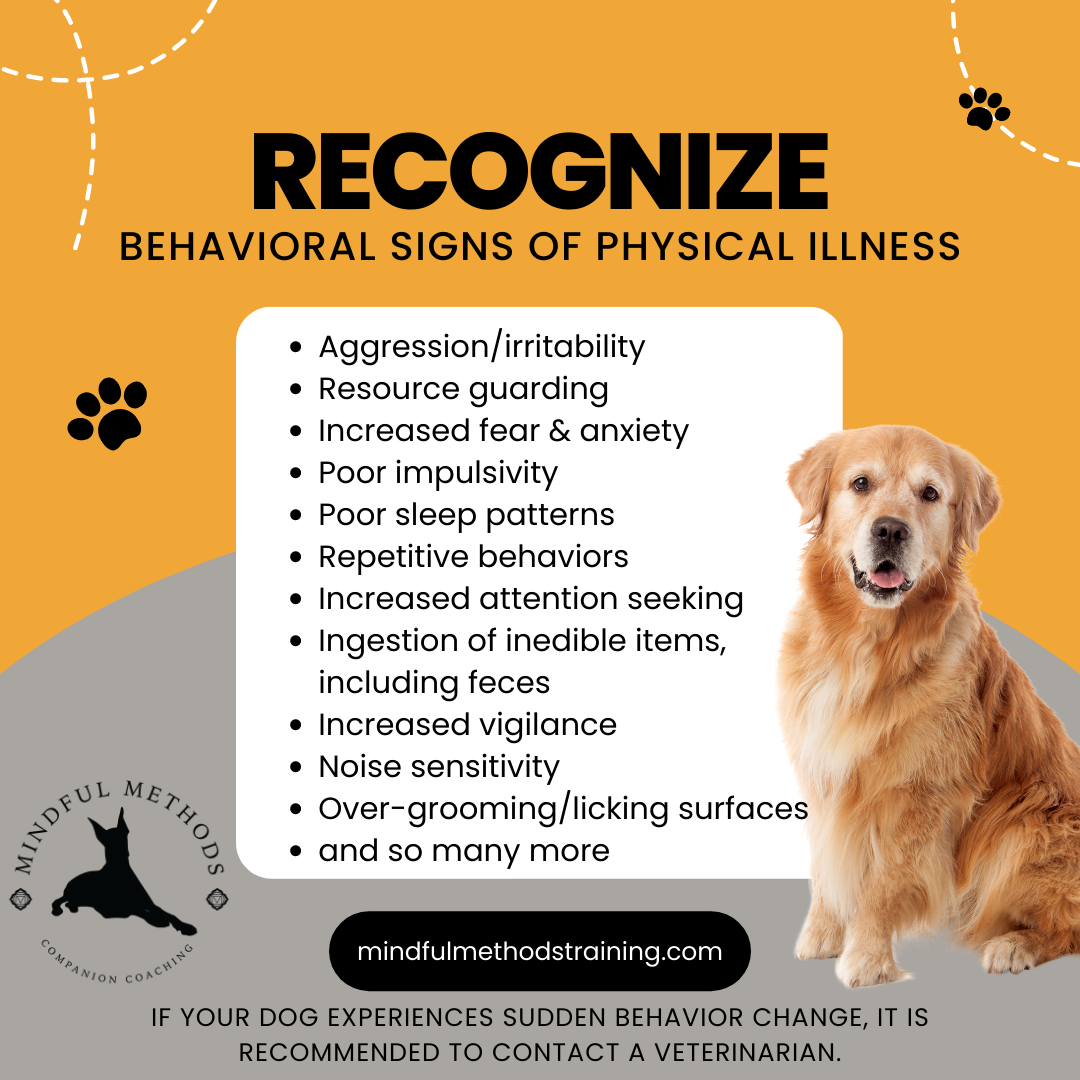
A lot of people that inquire with me are surprised when I recommend visiting a veterinarian to preemptively rule out signs of illness or discomfort - and this is especially true when the symptoms are sudden. Some of the biggest case flags for me are aggression, resource guarding, eating inedible items including feces, and repetitive behaviors. There are a plethora of other behavior signs that point to illness such as over-grooming/licking surfaces, increased attention-seeking behaviors, increased vigilance, general reactivity, poor sleep patterns, increased fear/anxiety, poor impulsivity, lethargy, noise sensitivity, and even separation-distress behaviors. These examples are by no means complete, either.
But here is the thing, client resources are almost always finite and all of this is exhausting for the guardian - both financially and emotionally. To be sure, there are many ways that hiring a training professional can increase safety and improve the quality of life for all parties involved. It is almost never a question of only training or only resolving physical ailments. If the behaviors have been presenting for a longer period of time, then they may have become an established habit or method of coping with any discomfort, including the emotional variety.
The way a companion feels physically can negatively affect their learning and emotions about certain events or triggers. Counter conditioning and desensitization processes will often be necessary even if a physical ailment is discovered and treated successfully.
I’d love to go into some of these sections below in more detail, but we’d be here all day - especially where pain is concerned. Stay tuned, though!
If I have suspicions that a physical ailment is present, I usually recommend seeking advice from a veterinarian and performing a complete blood count, chemistry with SDMA, T4 analysis, urinalysis, and a fecal test. If suspected GI issues are present, I may even recommend asking the veterinarian about the appropriateness of performing a Texas A&M blood panel.
Unfortunately, adrenaline can mask physical manifestations of structural issues at the vet office and many ailments cannot be discovered via bloodwork and can only be found through imaging and other methods. In many cases, a specialty vet is preferred if the client has the means.
Seeing as the digestive system controls a whopping 50% of the immune system, it is my opinion that GI health should be given an especially hard look by everyone on that companion’s team and should always stay in the back of our minds when pain or other diseases have been ruled out.
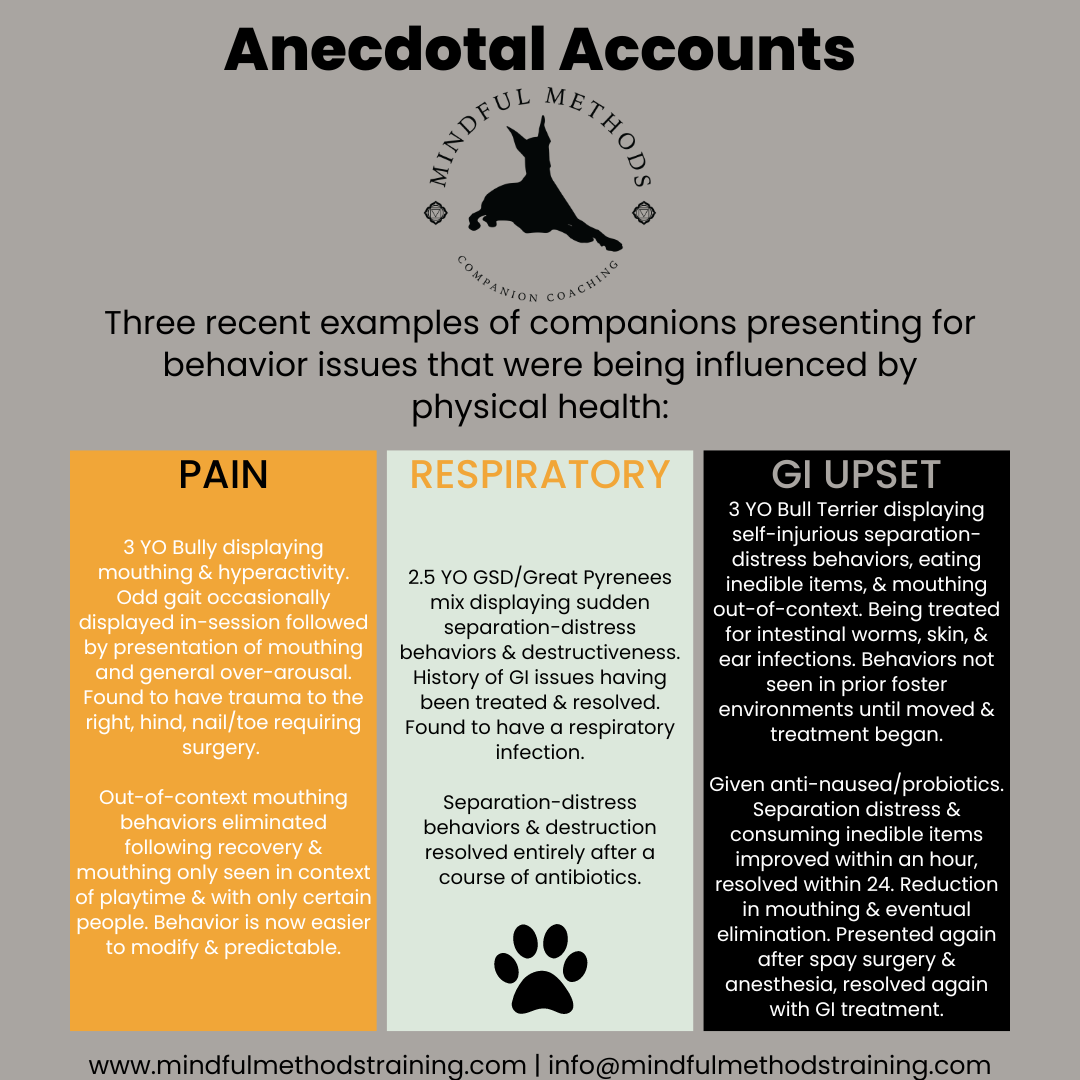
THE MORAL OF THE STORY. Keep an open mind! I always ask my clients, “Wouldn’t it be lovely if we didn’t have to approach every little thing through a training lens?” Behavior modification isn’t always easy. While I hope pain, discomfort, and illness do not exist, it can greatly hinder the prognosis for behavior modification if it goes unrealized. My philosophy is that all of our companion’s care, nutrition, enrichment, learning, and medical needs are reliant upon us. They are at our complete mercy.
Jessie Kasper
Source material:
Pain and Problem Behavior in Cats and Dogs - Mills et al., 2020
2022 Aggression in Dogs Conference, “Sometimes, it Might be Zebras When You Hear Hoofs. Unique Medical Conditions in Aggression Cases”, presented by Dr. Amber Batson