Resource Guarding
Before we can DO better, we must KNOW better!
Many people are surprised to find out that resource guarding is a natural behavior displayed in companions and is something that may not be possible to fully train out. While there are certain behaviors and exercises we can teach companions to reduce the chances that resource guarding will occur, once the choice has been made to escalate to conflict over items, it can very easily (and usually more readily) be made again.
For this reason, management is the first recommended approach to avoid resource guarding from occurring or intensifying. Keep in mind that practice makes perfect whether our companions are practicing desirable or undesirable behaviors! The more opportunities we allow them to practice resource guarding, the worse it may get.
Oftentimes, resource guarding is accidentally encouraged and reinforced by handlers who have heard outdated training advice that sticking their hands in food bowls or taking toys away desensitizes dogs when the opposite happens, instead. All your companion is learning is that you will, in fact, mess with their things and that they have every reason to guard their valuable items from you! This also breaks the most crucial bond we have with our companions: TRUST!
This is like a waiter delivering your food and then taking a handful off your plate, or teasing you by repeatedly sticking their hands near your food.
Would you be upset? What do you think your body language would look like? Would you hover over your plate? Pull it closer to you?
If they didn’t stop, would you resort to yelling? Perhaps you’d eventually make physical contact and swat their hand away - or worse?
Our companions feel the same way!
Furthermore, dogs are NOT inclined to share their items or food with other dogs. This is NOT natural in the wild and is a basic survival instinct. Canines that would allow their food to be taken by another canine or predator in the wild would be less likely to survive. This is genetic hardcoding and some breeds are more prone to guarding than others based on what they were naturally selected for by us.
We can teach counter conditioning techniques to encourage pleasant interactions but good management should be practiced for a lifetime. Some dogs naturally share their toys and bones nicely and others do not. Recognizing that each dog has their own individual personality and needs is the first step to understanding your companion’s behavior better. You can check out our blog on “Littermate Syndrome” which discusses how dogs learn and communicate socially with each other to help you understand how behavior and trust can erode with time.
Perhaps the most interesting thing about resource guarding is that sometimes it comes from a place of fear and social insecurity over losing their items. Recognizing this helps guardians to adjust their processes and responses when they realize they may be dealing with fear! In severe cases of resource guarding, a Veterinary Behaviorist may be recommended for further intervention.
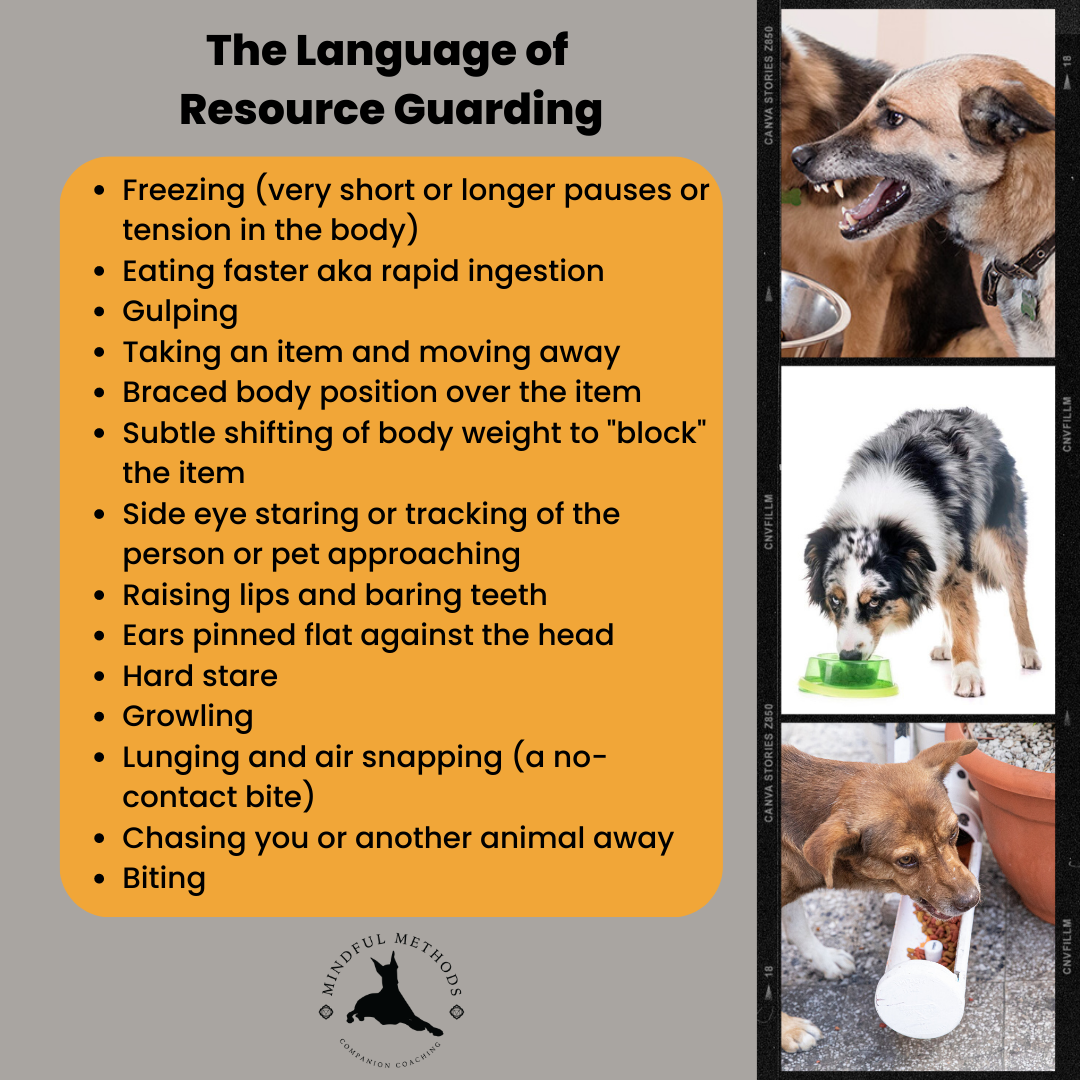
Simple reminders:
Avoid sticking your hands in bowls of food. Get used to giving your companion space while eating and not interacting until your companion has left their food area.
Discontinue taking items away from your companion without offering something valuable in return. Always practice good manners and TRADE UP! If there is any item that you need to retrieve from your companion (e.g., shoes, socks, rocks, sticks, toys, bones, etc.), show them the treat and toss the treat AWAY from you/the item. When they go to retrieve the treat, then you may grab the item.
Below is a video example, but PLEASE NOTE that none of the dogs in this video resource guard from humans. If your dog is reactive to your approach, their name, or cues like “drop it” when they have an item, it is recommended to call a professional ASAP to help you, as this may not be recommended for your household.
Set your companion up for success with guarding and practice good management. For example, if your companion likes to chew shoes – don’t leave them lying around so they can practice that and/or guarding them.
If you have a multi-dog household and guarding of toys or bones is an issue, the companion that wants to guard should be given that item in a private space and it should never be left on the floor. Sometimes the wisest practice is to disallow the item from the house so accidents cannot happen. Interestingly enough, studies have been done and dogs are shown to guard RAWHIDE BONES the most – even more than food bowls.
NEVER allow 2 dogs to eat out of the same bowl or directly next to each other. We recommend putting them in separate rooms to eat.
REMEMBER! Never punish a growl! This is one of the final methods of communication that our companions will give us before biting. Unfortunately, it is one of the only ones humans can readily recognize. When we punish growling, we take their voices away! This may result in a dog that escalates straight to biting with no warning anymore. Visit our free resource on body language below to recognize the many signs of stress and fear before a dog chooses to growl.
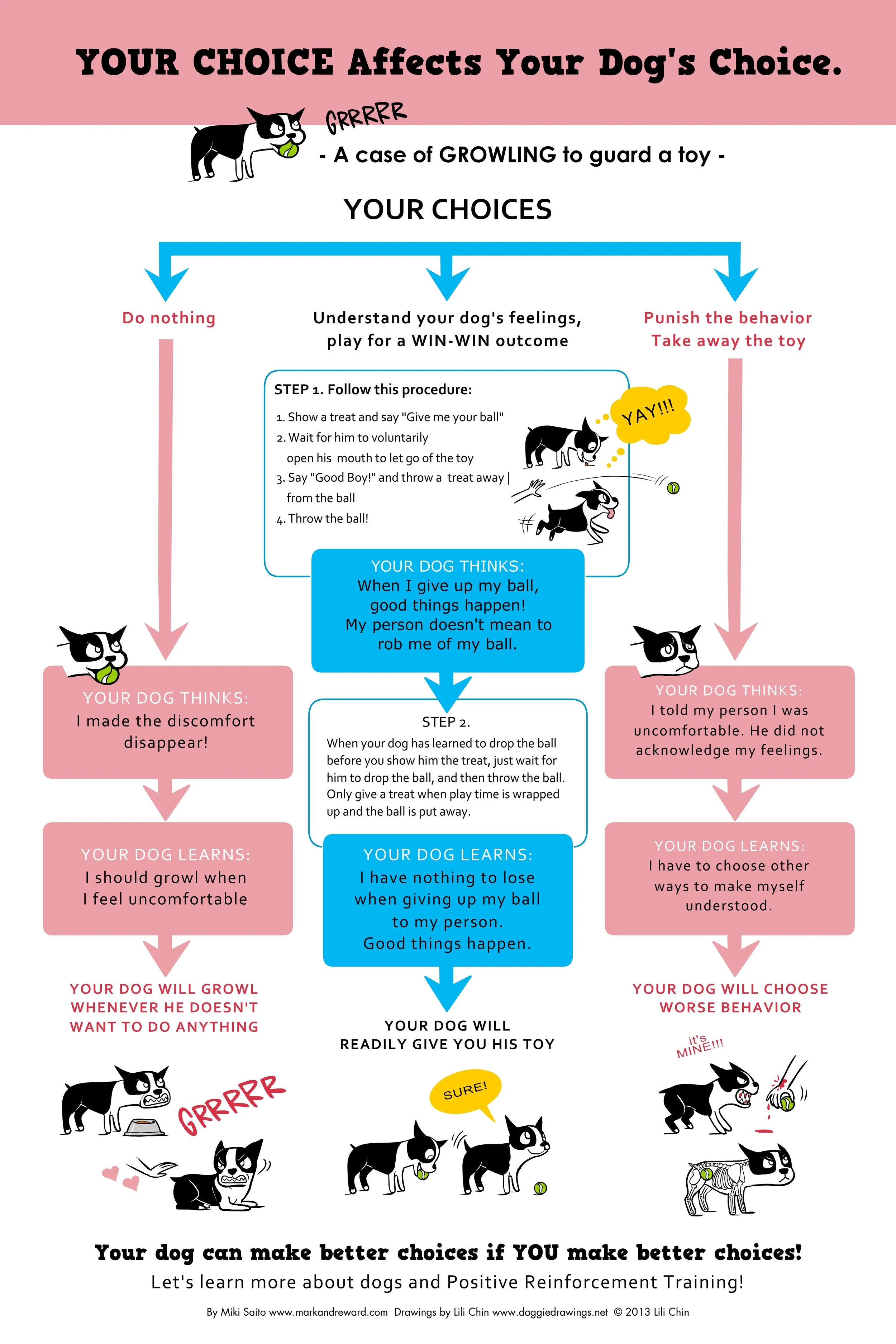
Additional Resources for Resource Guarding
We strongly encourage you to review this free webinar by Fear Free Pets. It is a little over an hour and a half long but provides valuable insight into the motivations behind guarding and the best practices to use. The webinar focuses on dog-human guarding but the info within is relevant to all types of guarding.
This quickie video by Eileen and Dogs shows resource guarding in slow motion and focuses on dog/dog interactions the most.
Recommended reading: Mine! by Jean Donaldson

Resource guarding can become serious very quickly. Contact us today to get going on making positive associations and learning new skills!