
Traumatic Medical Experiences with Pets
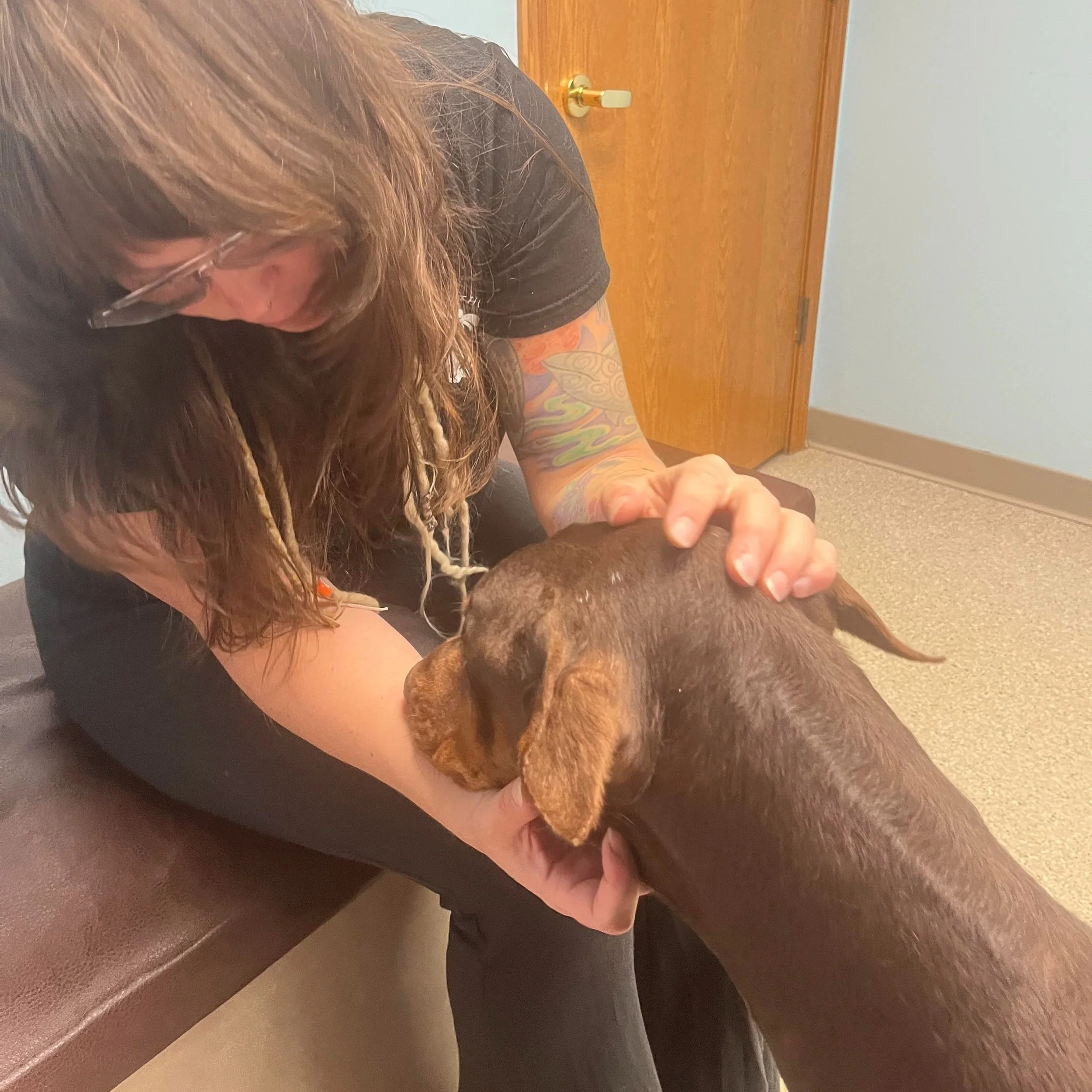
WOOF - I’ve had a rough couple of weeks. If you follow me on social media or work with me personally, you already know the story. In case you missed it, my Doberman, Ronan, experienced Gastric Dilatation-Volvulus (GDV) on Tuesday, October 24th, 2023 at around 7:30 PM. His stomach filled with gas (bloated) and then twisted/flipped, which resulted in extensive bruising to the lining of his stomach. Things got pretty hairy.
I’ll spare you the entire story as you can actually find it right here if you’re interested. What started as a means to process my grief and appreciation for my dog, snowballed into an educational experience that I didn’t entirely realize or set out to provide.
I am a writer, first and foremost. Since I was very little, poetry was my first true love and my first form of therapy. I prefer long-form writing now (hello, blog subscribers!) and ended up with an outpouring of not only support, but private messages of appreciation for educating the public while I was processing my own personal trauma.
I documented most of my journey, but what has been missing is my reasoning for doing the things I did. So, I wanted to provide that since so many people found the content useful, but character and video time limits prevent a lot of elaboration on socials.
Before I begin, I want to thank Illinois Doberman Rescue Plus for my time spent being entrusted with (potentially) hundreds of medical fosters. I have lost count, honestly, but I have done everything from heartworm recovery, rehabilitation for skin issues (my primary specialty), Leptospirosis, every type of fecal worm imaginable, autoimmune issues, tick-borne diseases, various surgery recoveries, and more.
My home has seen an endless amount of extremely sick animals and so the caregiving process is automatic for me. I hope that I can take some guesswork out of it for my followers should you unfortunately find yourself in similar situations, caregiving for a very sick animal.
Advocation is #1
I always preach to my clients that they know their pets better than anyone else in this entire world. If you go to a vet’s office because your pet is acting “off”, advocate for them. If you do not feel seen and heard, get a second opinion - PLEASE.
Ask your vet for a recommendation for a specialist or get on Google.
If you’re uncomfortable with this, reach out to friends and family for advice on providers they love and feel supported by.
In the case of a potentially life-threatening emergency, press for basic vitals as soon as possible.
If you’re at an emergency vet, ask for numbers to other practices close by. Every emergency vet will have resources to other places readily available to provide you.
I learned just how hard it was to speak up during my experience, so I understand it is easier said than done. Even though it is something I help my clients do directly every single day, I needed to lean on my friends in the industry to help guide me in my advocation for Ronan - so thanks very heartily to those folks that holstered my emotional fatigue that night and nurtured it as their own. I hope to repay you someday for your support.
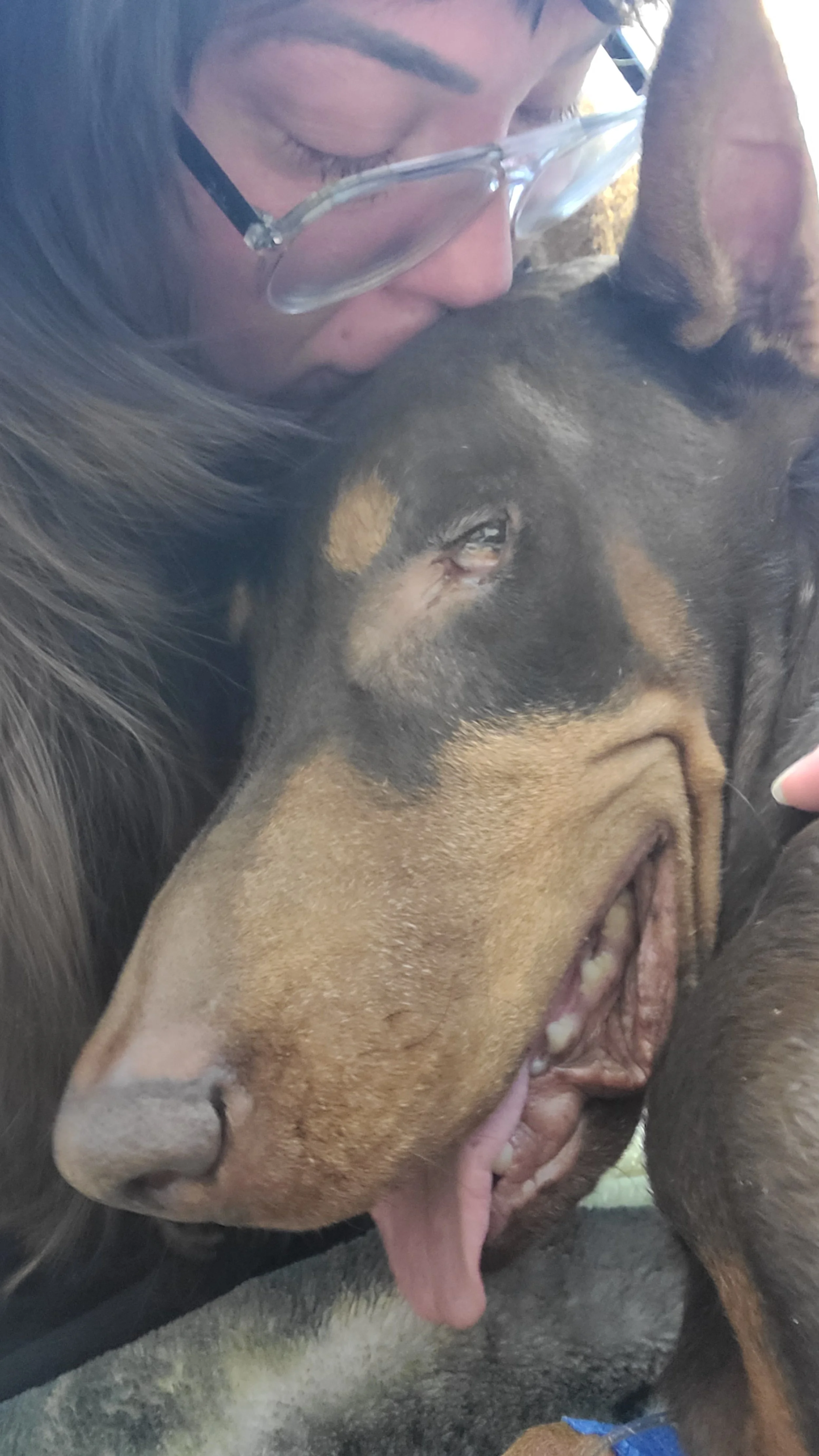
Visiting Ronan the morning after surgery.
Making difficult choices
So you’ve got some sort of diagnosis and now you have to make some choices that are potentially costly, could subject the animal to further suffering, or may have an uncertain outcome. This can make us wonder if we are making the right choices. These choices quite literally kept me awake at night.
I got the best encouragement I’ve ever received about making choices from an acquaintance. I was worried I was making the wrong choices for Ronan’s wellbeing, both short and long-term. She said…
“You have not made the wrong choice, you have made a choice. No matter the outcome, you’ve done what is best.”
That was a really powerful perspective that helped to change my own about the very serious responsibility of making choices that was placed on me. I couldn’t avoid making those choices and so they don’t necessarily need to be “right or wrong”. They don’t require any label other than “choices”. Be kind to yourself.
I can’t actually provide too much advice on HOW to determine choices because it depends on severity and financial resources. In the case of a true emergency, it will be up to that medical professional to provide you with gentle but direct and objective information about potential complications and outcomes.
Here are some good questions to ask:
What is the prognosis for recovery?
If they provide you with one that you don’t quite understand, ask for further clarification. A common term that is misunderstood is “guarded”, which means uncertain in it’s actual definition. I have found out that some providers (in all medical arenas) use this as coded language for what actually means “grave”, or highly improbable, when attempting to lighten the blow. So, do not hesitate for clarification in layman’s terms, if needed.
What is this going to cost right now to fix it? The best they can give you is an estimate, but don’t be afraid to ask.
How long do they expect recovery to take if everything goes smoothly?
Will daily/overnight hospitalization be required for consecutive days?
Do you offer both and what is the estimated cost of that, if so?
Or will I have to transfer them to another specialty center or my regular vet clinic for recovery?
What are potential complications during surgery?
What are potential acute and chronic complications after surgery?
If complications occur, what would the prognosis be again and would they recommend pursuing more treatment?
It is unfathomable to potentially spend several thousands of dollars to repair something only to lose your companion to a complication afterward. This is an outcome I had to wrestle with and be prepared for.
Only you know what you can handle emotionally and financially, and also what you are personally comfortable putting your companion animal through. I knew exactly what my next steps would be if everything didn’t go smoothly and was able to come to terms with that, thanks to the candor of the provider that night.
NEVER FEEL BAD FOR ASKING QUESTIONS. THERE ARE NO SUCH THINGS AS DUMB ONES OR WRONG ONES.
Visit your companion
This might seem like a no-brainer to some, but I know that seeing something you love being sick or potentially dying is emotionally difficult and some may avoid it. Our companion animals have a unique bond with us and our support and presence has calming and (I’d argue very strongly) healing effects.
Any living being’s level of stress has a potential to prolong illness and recovery (more on that in a moment) - so please, visit. It will provide emotional relief and feelings of stability during very difficult, painful, and critical times.
Here is how I framed my questions since first I visited him alone the next morning, and then involved my entire family later on in the day:
Is he well enough for me to visit in the morning when he wakes up?
This all happened so fast and my family did not really get to spend time with him before he left. We were wondering if it might be possible for all of us to visit him tonight and say hello?
It is very important to me that he rests if he needs to so that he can recover, so I appreciate your honesty and will understand if it is not a good time.
The veterinarians were HAPPY to allow us to visit as often as we wanted and encouraged us to call as often as we needed to check on him. In fact, we were genuinely thanked by every single tech and doctor that we crossed paths with for coming.
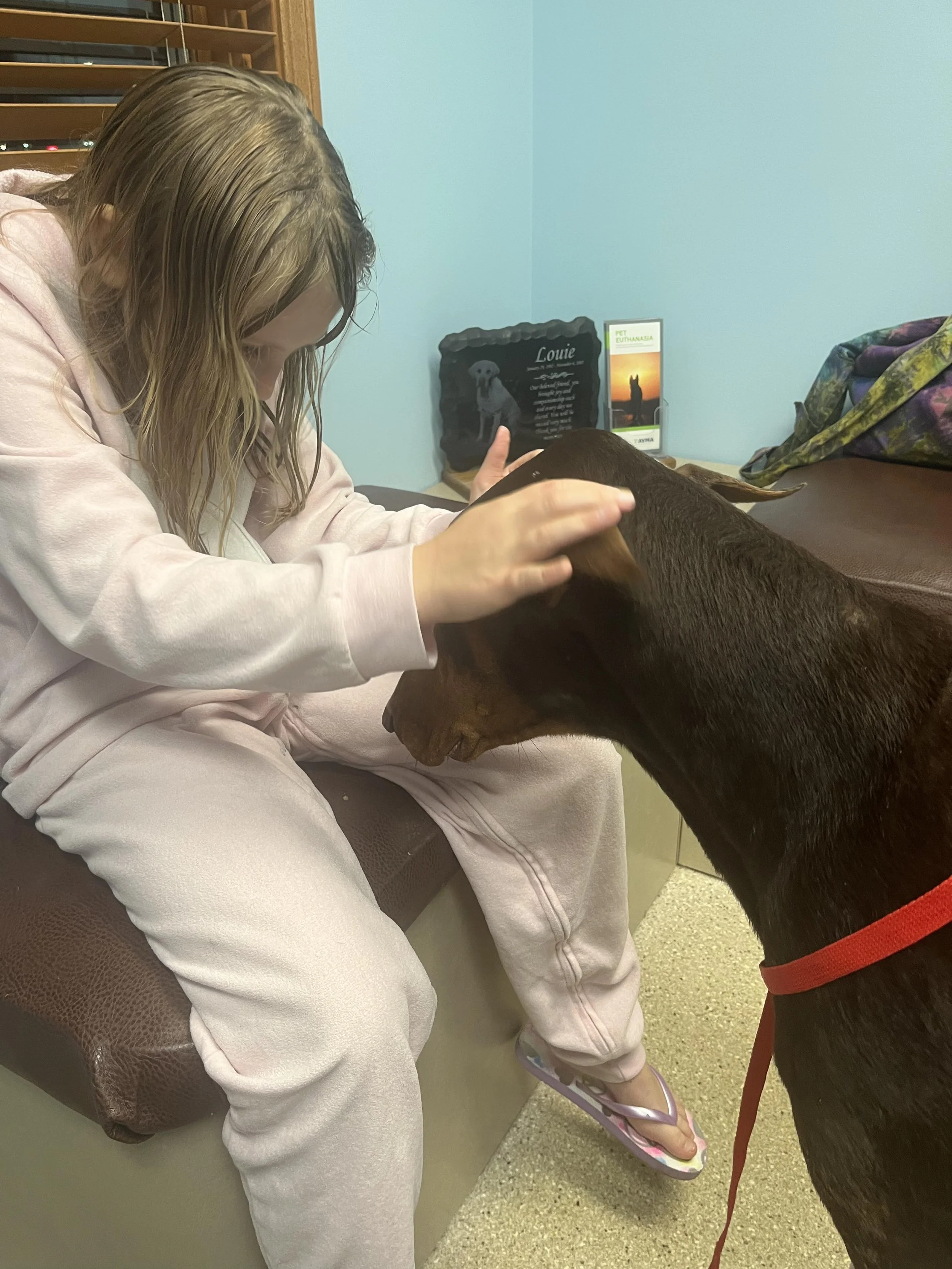
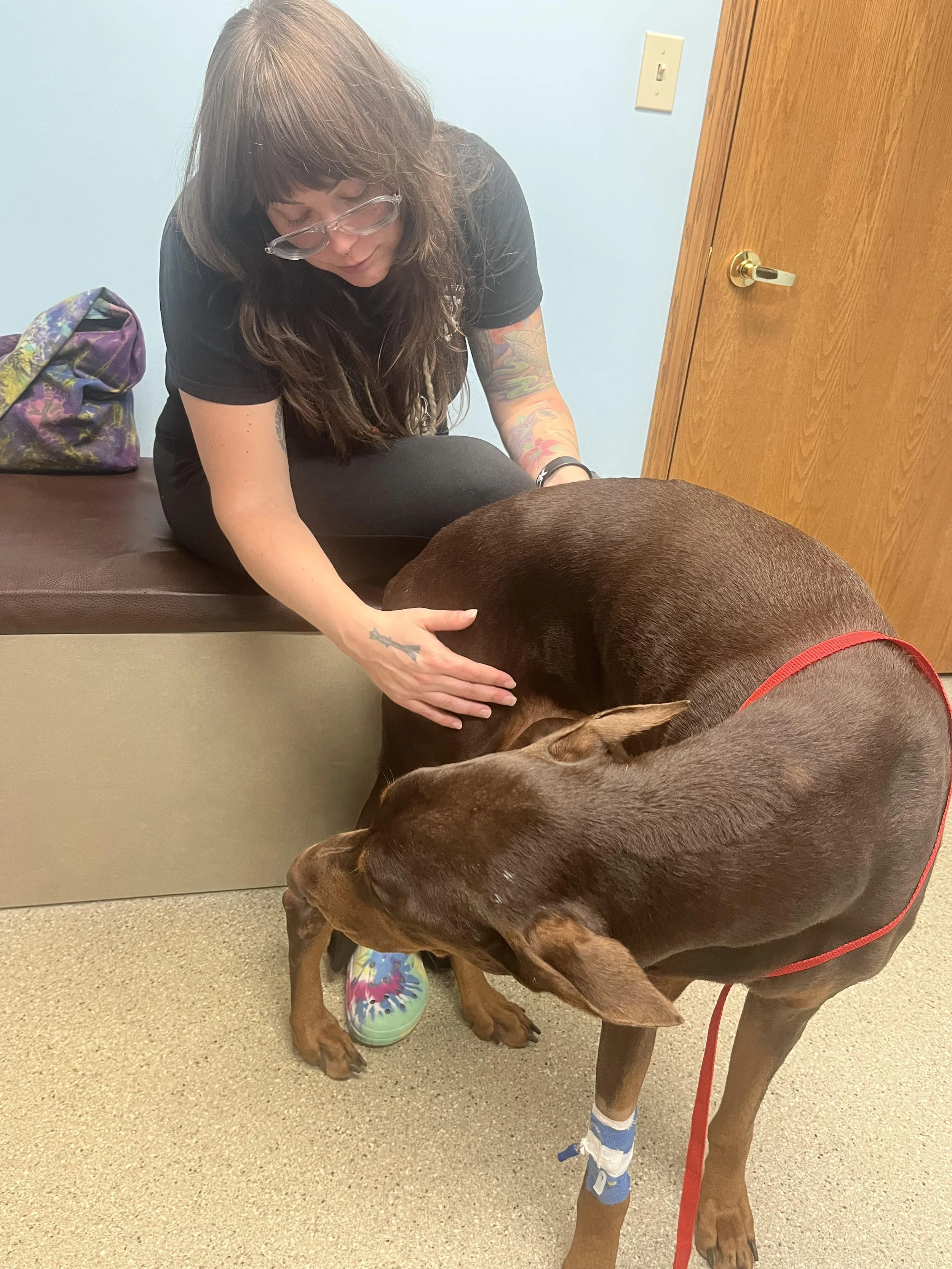


And come bearing gifts!
I also encourage you to bring comfort items as long as they are safe. Please ask the staff!
Dogs (and other animals) use their noses like we use our eyes. They gather TONS of information from scent and this can both stimulate and calm the brain significantly. This also provides an element of familiarity and security if they don’t get to come home right away.
Some ideas:
The first morning I visited, I left the shirt I had slept in that night with him.
When we came back as a family, we brought a fleece blanket from home that his fur-brother, Elvis, had laid on that day and that smelled like home.
Your companion may have a favorite stuffed animal you could bring! Ronan shreds stuffies and so that wasn’t an option with the nature of his injury. We did not want him ingesting anything by accident.
Where to recover at?
I can only speak for my specific situation, but I chose to leave Ronan at the ER vet for recovery. I am fortunate that one side of the vet office is an ER and the other side is a regular, primary care clinic. I was able to use the regular clinic in the daytime for observational care, and then he was transferred to the ER at night for overnight observation for a few nights. The 12 or so hours of ER care daily did add to my expenses.
In some cases, you may be able to transfer your dog into your regular vet’s office in the morning if they offer this type of service for daytime and nighttime observation. This can save on costs if you’re able.
It may also be possible that your dog is so severe they need to stay put or possibly even transfer over to a different specialty center with different capabilities. Every ER is different in what they offer, in many cases.
In Ronan’s case, I was extremely concerned for the viability of his stomach. He was a candidate to transfer to my primary veterinarian, but I didn’t feel confident moving him in my car after such an involved procedure. This also happened overnight and I was required to sign him out of ER care BEFORE my vet’s office even opened in the morning. I might be risking that they wouldn’t have space for him and I’d have to come back anyways. This seemed like unnecessary stress.
My other concern is that Ronan really likes our primary veterinarian a whole lot. The clinic does not bother him and neither does his doctor. Traumatic medical experiences can have profound effects on temperament, anxiety, handling issues, and fear going forward.
I wanted to keep this experience contained to this clinic for his emotional wellbeing at his normal provider going forward - and I’m glad that I did. This isn’t his first rodeo at this ER vet but his response this time around to his rechecks have been very different, even just pulling up to the building.
This might be out of your control but you should be aware that these types of experiences can change the perception of your vet care providers so that this doesn’t come out of the blue for you.
Time to go home
Walking Ronan out of the emergency vet!
You’ve made it through the worst, and it’s time to come home. This might not necessarily mean everything is in the clear for you. Recoveries can be difficult and when the injury is such that there isn’t really any “medicine” that can fix it further, the preferred place to recover will always be home where that animal is most comfortable.
Home is the place where your companion is the least stressed, has familiar routines, smells, support and love, and can get the deepest rest possible. In any recovery, adequate rest is paramount to the body healing itself. This can feel scary for you and like you might not be ready.
There is support that can help you be successful. It is better to be over-prepared than to need something and not have it, so ask your provider if any of the following will or can be sent home:
Pain relief
Sedation
Anxiety meds
Those first two are very common, but the last one is often not thought of. Animals can be confused and scared, on top of feeling stress from the pain of procedures. Pain is stressful all by itself - nothing about it is relaxing. Sometimes reducing the pain can address the anxiety, but psychological trauma all on it’s own is still possible. Having all of these things on board preemptively can ensure that your companion can rest and recover peacefully.
Setting up a recovery area
Where your companion recovers at depends on your home layout, their habits, your routines, and what you can accommodate. Surgical procedures often require a period of reduced activity or crate rest. It will also be recommended to disallow contact/play with other dogs, trips to the yard alone and leashed, not allowing them to climb stairs, or jump on furniture to avoid ripping incisions open.
There’s many things about that that don’t quite work for me:
Ronan will accept a crate still and will go in one without complaint, but he does not generally use one anymore. I do not feel this scenario would reduce stress in any manner - in fact it would increase stress, in all likelihood.
Ronan usually sleeps with me in bed, under the covers, pressed against me. Sleeping without me would be confusing, stressful, and another upheaval to routine.
I have a split-level home which means I have several sets of stairs (3 to be exact). That’s a lot of potential areas he shouldn’t have access to.
Access to my backyard is actually off my second/mid-floor level and there is a step down into the yard. This level of the home is one that we spend the least amount of time in.
So where did we go and what was the logic?
Access to my front yard is attached to my walk-out basement. There are no steps out to my front yard.
Our main TV room is also down there. The floors are heated and it happens to be the warmest room in the house. This is where we spend the most time relaxing as a family. He would feel less alone and less stressed here.
My walk-out basement is big enough to set up an x-pen system. This will keep him safely confined and restricted without needing to use a crate.
The couch is big enough for me to sleep on so I could be close and keep the nighttime routine of being near me somewhat normal.
Ronan respects gates and typically doesn’t jump them or plow into them. Especially when he was first recovering and more sedate, I knew I could count on him to not push the gate down so it was not attached in the back and is just bumped up to the wall. We have used x-pens constantly over the years and know what to expect, so if you’re unsure, enclose the entire area.

LaLa is keeping the first version of the safe space warm for Ronan!
The almighty safe space setup
I love - LOVE - safe spaces. Whether you dislike crates or just want to give your companion more freedom, a safe space is a lovely compromise.
The use of a safe space can also provide protected contact between small children or other animals in the home, while helping companions still feel included.
Safe spaces can be made in interior rooms by setting up pressure gates in doorways or in bigger/awkward spaces using x-pen systems, which is the route I took.
Regardless of your feelings of Amazon, their shipping times came in clutch for this experience. We weren’t sure when or if he’d come home, and so I needed to wait to get some things I needed. Sometimes it is a necessary evil. Check out this gigantic cuddler bed I bought that is made for humans and dogs to lay together!
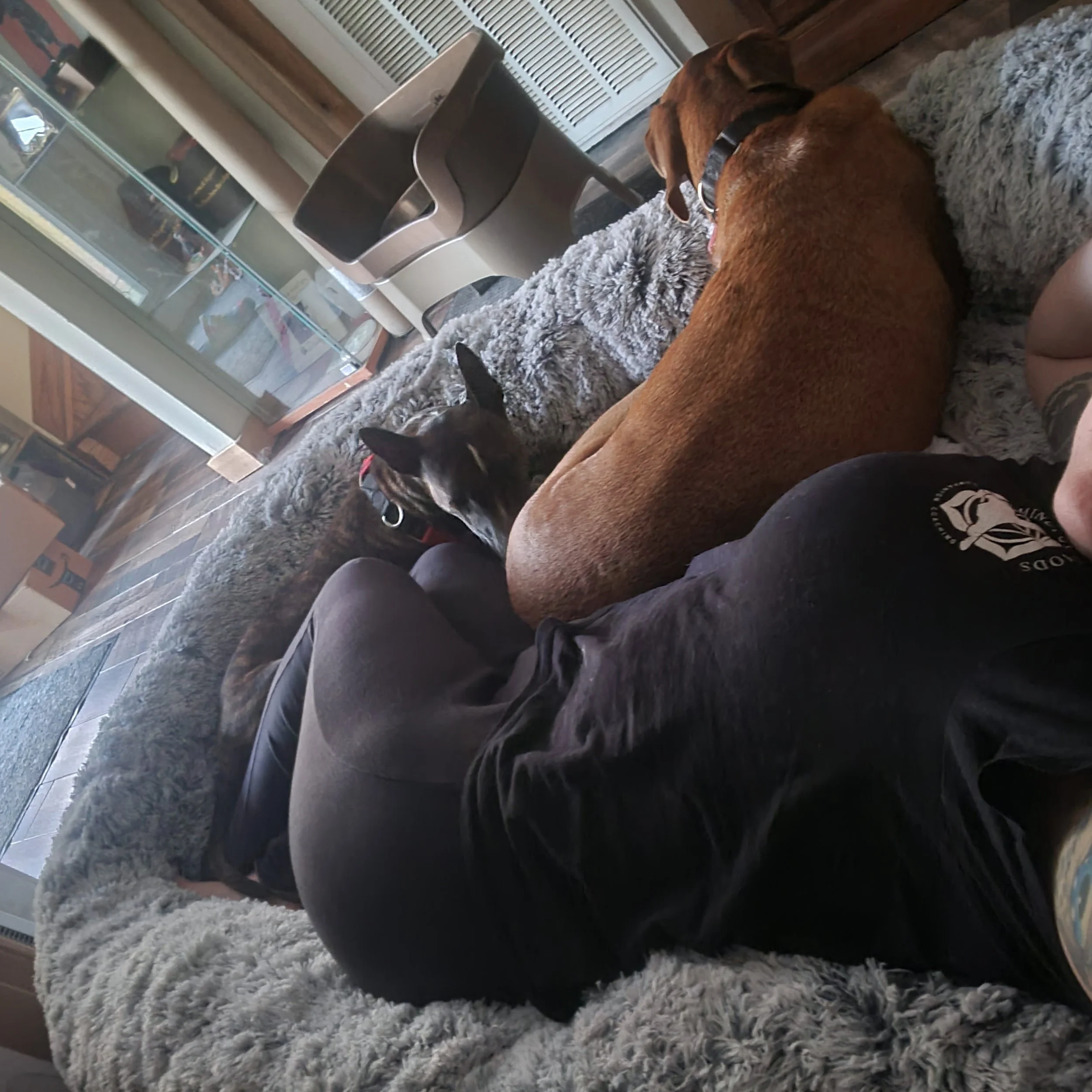
I really wanted to figure out how to get nighttime sleep as close as possible to his normal routine and to be able to sleep WITH him. He couldn’t climb 2 flights of stairs to my bedroom and carrying a Doberman up and down isn’t realistic.
A blow-up mattress might work for you, but with Ronan’s size I was worried about the overall stability of one and him getting on and off of it.
His final safe space ended up containing the following:
2 choices of places to sleep in case he got uncomfortable, hot, or just felt like making a choice for himself during recovery. Choices are limited during this time and giving him some autonomy over his rest felt right to me.
Interlocking foam mats - this provided a soft landing under his feet that was also non-slip so he did not further injure himself on the tile floors. He was experiencing weakness and drowsiness afterward and his stability was off. This also reduces fear when dogs aren’t sliding around on the floor. It is scary to slip and almost fall!
His blue mat - he is trained to settle on a mat/place and associates that item with comfort, being calm, and positivity. The sight of it can provide mat trained dogs with a visual cue for further routine and familiarity. When he got out of his beds, it was available there to stand on and is nice and soft. He could have laid on it but I knew he likely wouldn’t. My other dog, Elvis, actually ended up using it a ton.
His raised food/water bowl, naturally. If you have a large breed and they aren’t eating out of raised bowls daily, I recommend them to reduce strain on the neck but especially if your dog is experiencing recovery from surgery. We want them feeling as stable as possible and in their center of gravity.
A blanket - a true necessity for Ronan. He sleeps under the covers with me every night and during recovery we want to make sure that body temperature stays up and your companion is warm and isn’t wasting energy shivering. We want the body focusing solely on healing.
3-5 comfort items through toys and enrichment would be recommended for a healthy dog but since Ronan’s injury involved his stomach, he had strict rules. I always love the use of safe spaces for everyday life.
Below is a photo of a well-made safe space from one of my clients that her dog uses daily for separation:

The little extras for calming
I don’t know about you, but as a caregiver (mother, wife, woman in general) I will throw everything and the kitchen sink at a situation to make things better for my loved ones.
Here are some extra-special touches in Ronan’s safe space:
Adaptil collar - this is a calming, pheromone collar that gives off the same hormones as a nursing mother dog and can have awesome calming effects on some companions. They come in small, medium/large, and puppy sizes! Comfort Zone makes a cat version, too!
This is a holistic remedy that is endorsed by veterinarians. As with all holistic approaches, it may work to varying degrees depending on the dog and the issue, or may not work at all.
Essential oils (please Google before using as many can be extremely toxic) - another holistic approach that elicits some really strong opinions from people ranging from total buy-in, to skepticism, to total disbelief. Regardless of what you personally feel, animals DO find new scents enriching. Remember what I said earlier about scents being stimulating as well as calming due to how dogs process their world? There are studies done in shelter dogs about specific scents being calming. So, then I simply cannot argue or deny their use in this instance where Ronan’s activity was restricted for such a long period of time and honestly, it just doesn’t hurt.
Rosemary for it’s antimicrobial, anti-inflammatory, antioxidant, antinociceptive (pain relief), and neuroprotective properties.
German Chamomile for it’s anti-inflammatory, antimicrobial, antifungal, digestive upset, and sleep properties.
Lavender for it’s anxiolytic (stress relief), antinociceptive (pain relief), antimicrobial, anti-inflammatory, and antioxidant properties.
Calming music - we always sleep to soft piano, ocean sounds, or some type of calming music at night. I made sure that during sleep and other quiet times that my “nighttime” music was playing since Ronan associates this with rest already.
The oxytocin loop - a really interesting concept that you can read about. <3
The timeline for healing
This will depend on what your dog is going through, but anything requiring surgery comes with staples or stitches. 10 days is typically the sweet spot for these to come out, but your provider may say up to 14 days depending on the injury.
For Ronan, he got his staples out in 10 days but was still on recovery for 14 days with some lingering restrictions. Here is all of what we went through for this ailment:
We arrived at home with the other dogs locked up so we could get Ronan peacefully into the home and into his safe space without further injury. Sometimes the smell of an animal returning from the vet (and especially from surgery) can be extremely alarming to other animals - they will often smell like fear and injury. Dogs smell first in many cases and use their eyes secondarily. Not “recognizing” their housemate could mean potential aggression.
Once Ronan was in the safe space and settled, Elvis was let out to visit and see Ronan in protected contact to ensure everyone’s safety. I know Elvis extremely well and he is a very soft-mannered dog. If your dog can be grouchy, fearful, or nervous sometimes, then you can consider using a second layer of safety with leashes.
You can tell Ronan is a little nervous with the exchange by the position of his ears and the way he turns his face away sometimes. The gate helps to create a physical buffer and it is a good idea to have 2 people available. Each dog can wear a lead for added safety and control, too.
The first 24 hours after coming home he was the most drowsy and his safe space was kept the smallest. Elvis was offered the blue mat outside of it so he had a soft spot to lie down and be close to Ronan and provide comfort. Elvis himself was worried, so the mat also helped Elvis to feel secure. Check out these precious photos:


The following day, his safe space got a little bigger and I began sleeping inside of it with him. Elvis was also introduced to the safe space for short periods of time. I can count on Elvis to stay pretty calm but this might not be a good idea so soon for you.
Building the second version of the safe space for Ronan!
On the 3rd day, we installed some gates on the 2 staircases leading up to the main/mid-floor level so that Ronan could have short periods of time where he could stretch his legs in the basement but not have access to climbing the stairs. This also helped me separate Elvis when needed during that time so Elvis did not try and play with him.
The first 4 days after arriving home were a sensitive time for Ronan’s stomach. While it was determined to be viable and not necrotizing, there was a very real risk for perforation/tearing still. Not only could he not run, jump, and climb due to his staples, he needed to stay calm and rest to not tear his stomach.
He also couldn’t eat lots of food or drink lots of water at once. He needed 4 TINY meals per day for the first couple of days with a bland diet. This literally meant 2-3 tablespoons of wet prescription food at a time. For water, he was getting a half cup to a cup at a time between meals. Everything had to be paced so there wasn’t too much weight in his belly at once.
Every day he could eat more and more. Once we hit a total of 5 days out from surgery, risk of perforation decreased dramatically and he could begin stepping up food intake more quickly.
This is also when I began practicing desensitization to wearing a cone because I had to go back to work. Check out this awesome video of him working with me!
Enjoy this snippet! It IS possible for your dog to learn to LOVE a cone!
Ronan could not use the yard off-leash or with other dogs for 10 days until the staples came out. He went to the front yard only and was closely monitored.
On day 10 he got the staples out and the gate around his safe space was taken down so he can access the couches downstairs. We have plenty of gates still separating larger spaces.
He was allowed to climb the stairs again but still should not run up and down the stairs, so the gates stayed in place and stayed closed unless we were changing locations in the home.
He was also allowed to use the backyard again off-leash, but alone. He still couldn’t run in the yard till he was 14 days out from surgery.
Once we hit 14 days, life returned to normal and he began transitioning off homemade chicken and rice and back onto his kibble.
Practice Self Care!
This is an extremely stressful time - especially if you are the primary caregiver and also have a job and family. Don’t forget to take some time for yourself to decompress.
Here are some things you might consider:
Go on a decompression walk! Take your other dog, if you have one. Hit up a forest preserve and get some natural enrichment. Your other dog will thank you and feel less stressed too when allowed to sniff and explore! Fresh air can do wonders for everyone.

Elvis went for a walk with his friend, Jackson, the day Ronan was cleared to be alone for a couple hours at a time. It was such a great mood boost for the both of us socially.
Go for a drive and put on your favorite music.
Call friends or family and make sure you socialize or vent, if that is your thing!
Rest, hydrate, and watch some comfort shows/movies.
Treat yourself - that could be a long bath, getting dinner delivered, or eating something yummy like ice cream. Sometimes comfort food is where it’s at.
Read or journal if you like to do that!
Insight Animal Behavior has support sessions available if you feel very overwhelmed and want a non-biased support system. These sessions are geared towards caregivers of behaviorally-needy companions, but any type of personal struggle involving pets is welcome!
A final note
Thank you to all the friends, family, and clients who supported me during this time. It took an entire village of emotional support to pull through. Many stepped in and helped monetarily and one client even booked me a massage! I am so fortunate to meet such wonderful people in my travels.
I love all of you and your companions - thank you for loving me back!
Written by:
Jessie Kasper IAABC-ADT, FDM, FFCP, PNCC
Mindful Methods Companion Coaching
*This post contains Amazon affiliate links and may qualify for commission when completing a purchase.*