Positive Reinforcement (R+) Training Concepts
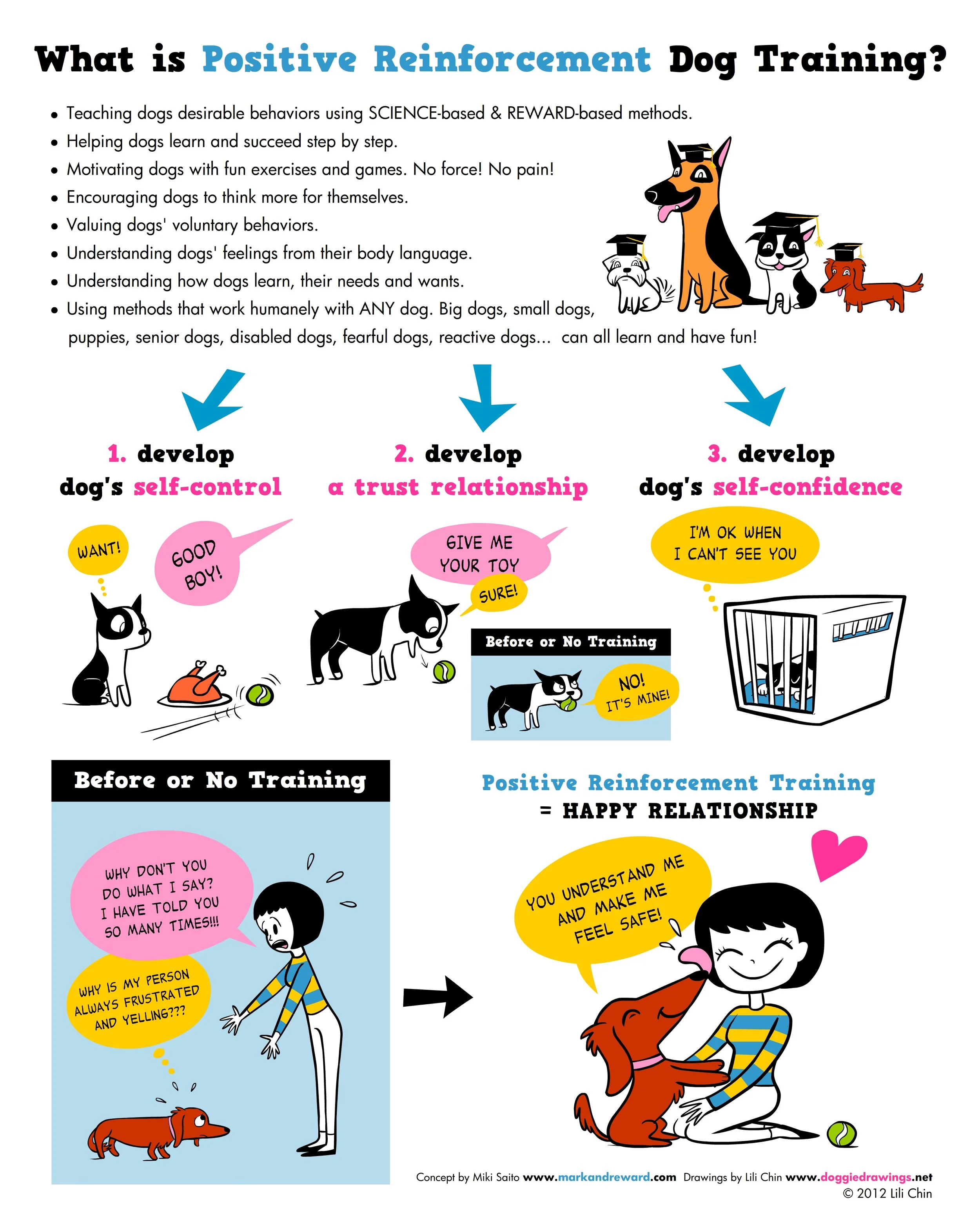
Positive reinforcement (R+) training operates on the principle that companions that are rewarded for behaviors are more likely to repeat those behaviors again. Through R+ training we can make positive associations to triggers and the environment. R+ can be used not only to teach brand new behaviors, but also to modify old behaviors, habits, and pre-existing negative emotional associations.
R+ takes a heavy focus on rewarding the desirable and natural choices that companions make without being asked/cued. Companions that are rewarded for the good choices they make feel empowered with independence and problem-solving skills. Since R+ also focuses heavily on reading body language cues, companions can gain a sense of autonomy in their training. All of this helps to increase trust and build a better bond with your companion. When we focus on setting a companion up to succeed, companions feel motivated and experience less frustration than with other methods. Furthermore, R+ is the recommended and endorsed training method by the American Veterinary Society of Animal Behavior (AVSAB).
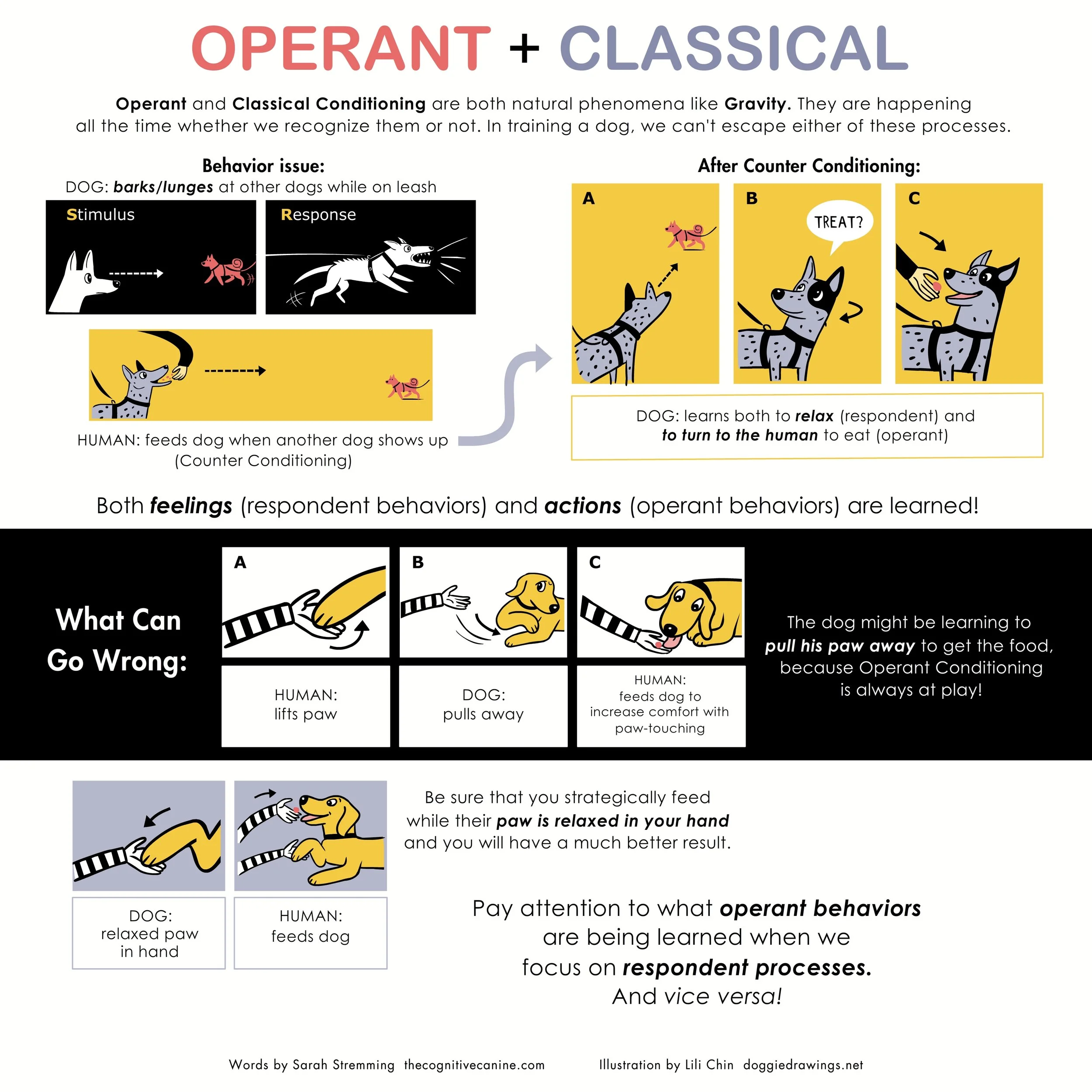
You will hear me talk a lot about conditioning concepts and one of the biggest ones I use is classical conditioning. Classical conditioning takes a neutral stimulus (sounds/words) or an involuntary response (behavior displayed naturally) and associates it with an outcome - which in the case of R+, that would be reward. This is also known as Pavlovian learning or associative learning. One of the first things companions are classically conditioned with during training is that the word YES means treats are incoming.
This same concept can apply to triggers in the environment and we can quickly turn this into classical counter conditioning. Through repetition in pairing triggers with positivity, we can begin the process of desensitization and slowly change the emotional association that companions may have to their environment, which begins the process of behavior modification. When counter conditioning techniques are used preemptively with young dogs, we can help to avoid problematic behaviors from ever forming in the first place by making sure that any novel item that they see and hear gets marked with a YES (there's that powerful word again!) and paired with treats/positivity right away. While there are no guarantees in training, the more positive experiences we can expose a companion to, the higher the likelihood of success later on in life.

Through these methods, companions can begin the process of operant conditioning. With operant conditioning, companions associate a voluntary behavior with an outcome now. For instance, if we have classically conditioned the natural choice to sit often at our feet and our companions begin to understand and readily offer this behavior more frequently - now we can give the behavior a name and begin cuing it. Each time you ask your companion to "sit" and they perform the behavior voluntarily, we can mark with a YES and reward the companion. Likewise, once ample counter conditioning has taken place, companions may see a trigger and automatically look toward their handler in anticipation of treats. They are now associating the trigger with something other than fear or barking, and performing an entirely different voluntary behavior. Operant conditioning takes place all the time whether or not we are actively engaging our companions in training. By focusing on assisting your companion through the process of learning and associations, we can help to ensure the right kind of operant conditioning is being practiced.
THE MORAL OF THE STORY
DO NOT WAIT until your companion begins displaying fear and/or reactivity. Teaching good habits and emotional responses right off the bat will always be easier than modifying an undesirable behavior that has been practiced and reinforced to the point of becoming a habit or routine already. The more preemptive we can be in our methods, the higher the likelihood is that your companion learns appropriate coping skills and can maintain them throughout their entire lives.